





Installation and Safety Tips for Pure Sine Wave Inverters
- Understanding inverter fundamentals and selection
- What is a pure sine wave inverter and why it matters
- When to choose pure sine vs modified sine
- Key selection criteria I use
- Site preparation and mechanical installation
- Environmental and location considerations
- Mounting, spacing and orientation
- Thermal management best practices
- Electrical connections, earthing and protection
- DC input wiring — best practices
- AC output wiring and transfer switching
- Earthing and bonding
- Commissioning, testing and compliance
- Pre-commission checks I perform
- Functional tests and performance verification
- Documentation, labeling and compliance
- Operational safety, maintenance and troubleshooting
- Routine maintenance schedule
- Common faults and how I diagnose them
- Safety during maintenance and repair
- Standards, certifications and verifiable references
- Relevant industry standards I rely on
- Proof points — how to verify a vendor
- Example performance metrics
- Manufacturer note: Guangzhou Congsin Electronic Technology Co., Ltd.
- Quick-reference checklist (installation & safety)
- Frequently Asked Questions (FAQ)
- 1. Do I always need a pure sine wave inverter?
- 2. How do I size the inverter relative to my loads and batteries?
- 3. What protective devices are essential on the DC side?
- 4. Can I install an inverter myself or should I hire a professional?
- 5. How often should I service my inverter?
- 6. What documentation should I keep after installation?
I have installed and commissioned hundreds of pure sine wave inverters for vehicles, off-grid homes, solar systems and portable power stations. In this article I summarize best practices that help you achieve safe, reliable, code-compliant DC→AC conversion while avoiding common installation mistakes. The guidance below focuses on system design, mechanical installation, electrical connections, protection and testing, and ongoing maintenance — all backed by industry references and standards to help with verifiable, professional deployments.
Understanding inverter fundamentals and selection
What is a pure sine wave inverter and why it matters
Pure sine wave inverters convert DC to AC that closely matches utility grid sine waves. That clean waveform minimizes harmonic distortion and ensures compatibility with sensitive electronics, motors and appliances. For an overview of inverter types and basic operation see the inverter entry on Wikipedia: Inverter (electrical).
When to choose pure sine vs modified sine
In my experience, pure sine is the right choice for systems powering variable-speed motors, medical devices, modern electronics, HVAC drives, audio equipment and most grid-interactive applications. Modified (or quasi) sine may work for resistive loads (incandescent lighting, simple heating), but it often causes inefficiency, additional heating and audible noise on appliances. A direct comparison helps make the decision clearer:
| Characteristic | Pure Sine Wave Inverter | Modified Sine Wave Inverter |
|---|---|---|
| Output waveform | High-fidelity sinusoid, low THD | Approximate steps, higher THD |
| Compatibility | All sensitive and inductive loads | May cause trouble with motors, UPS, fans |
| Typical efficiency | 90–96% depending on model and load | 85–92% often lower under complex loads |
| Use cases | Solar inverters, RVs, medical, audio, computing | Simple tools, lighting, low-cost portable use |
| Reference | Industry literature and manufacturer datasheets | Wikipedia overview: Inverter (electrical) |
Key selection criteria I use
- Continuous and surge power ratings (not just peak ratings).
- Efficiency curves at realistic loads (20%, 50%, 80%).
- Waveform THD (Total Harmonic Distortion) — lower is better for sensitive equipment.
- Safety approvals (CE, ETL, UL/IEC, RoHS) and IP/thermal ratings.
- Features: remote monitoring, built-in charger, AC transfer relay for hybrid setups.
Site preparation and mechanical installation
Environmental and location considerations
I always start with site assessment: ambient temperature, ventilation, proximity to batteries, and vibration sources. Inverters typically need free air around them for cooling; enclosed cabinets must be ventilated or climate-controlled. Many inverter manufacturers specify operating temperature ranges in datasheets — exceeding those limits reduces lifespan and reliability.
Mounting, spacing and orientation
Follow manufacturer instructions for mounting orientation and clearance. Mount on a rigid, vibration-free surface. Provide at least the recommended clearance on all sides to allow airflow and service access. For roof, vehicle or mobile installations, use anti-vibration mounts and avoid routes where water can pool.
Thermal management best practices
To minimize derating I ensure adequate airflow, avoid mounting near heat sources (engine compartments, exhausts) and, if necessary, add forced ventilation or heatsinks. For systems that will operate near their maximum continuous rating, classify the installation as high-duty and plan thermal monitoring or derating factors accordingly.
Electrical connections, earthing and protection
DC input wiring — best practices
Use appropriately sized battery cables for the DC input to limit voltage drop and avoid overheating. I calculate conductor size from continuous current using standards such as NEC (NFPA 70) and manufacturer guidance. Place an accessible DC-rated fuse or circuit breaker close to the battery positive terminal — typically within 7 inches (~18 cm) — to protect against short circuits. For reference to electrical code basics, see the National Fire Protection Association: NFPA and OSHA electrical safety guidance: OSHA — Electrical.
AC output wiring and transfer switching
For grid-tie or backup hybrid systems, ensure the inverter’s transfer switch (manual or automatic) meets local code and anti-islanding requirements. When the inverter is used in standalone or UPS configurations, wire dedicated distribution circuits for critical loads and label them. Use GFCI/RCD protection where required (bathrooms, kitchens, outdoor outlets).
Earthing and bonding
Proper earthing reduces electric shock risk and provides a reference for protective devices. Follow local regulations: bonding frames, chassis, and cable shields per NEC (or relevant national standard) and the inverter manual. For solar and PV-related inverter installations, consult IEC 62109 (IEC 62109) and UL 1741 (UL 1741) guidance where applicable.
Commissioning, testing and compliance
Pre-commission checks I perform
- Verify model and software/firmware versions against the project design.
- Confirm DC polarity and correct fuse/breaker sizes close to the battery.
- Measure open-circuit battery voltage; ensure state of charge aligns with inverter startup requirements.
- Confirm earthing continuity and verify AC neutral-ground bonding per system type.
Functional tests and performance verification
After powering the inverter for the first time I run these tests: low-load and full-load performance (if safe), transfer timing for backup inverters, AC waveform quality (use an oscilloscope or a power quality analyzer to verify low THD), and protective device operation (overcurrent and earth-fault detection). For waveform and power quality reference levels, IEEE and IEC publications provide measurement methods; see IEEE Xplore or IEC resources for detailed test procedures.
Documentation, labeling and compliance
I document the installation with a clear wiring diagram, settings, firmware version, and customer instructions. Each AC and DC breaker, critical circuit and the inverter enclosure should be labeled. Verify declared conformity marks — CE/ETL/UL and RoHS — and keep copies of certificates with the installation record. For ISO quality frameworks that manufacturers adhere to, see ISO 9001 information at ISO — ISO 9001.
Operational safety, maintenance and troubleshooting
Routine maintenance schedule
I recommend a quarterly visual inspection and an annual full service for most installations. Inspections should check cooling vents, cable integrity, torque on busbars and terminals, and evidence of corrosion or water ingress. For battery-coupled systems, include battery health checks and terminal cleaning. Keep logbooks or digital records for warranty and lifecycle analysis.
Common faults and how I diagnose them
Typical issues I encounter: inverter over-temperature shutdowns, DC input undervoltage (batteries low or weak), AC output faults due to improper neutral bonding, and unexpected tripping of protective devices. I use a systematic approach: check for logged fault codes, replicate the fault under controlled conditions, measure DC and AC parameters, and isolate subsystems (disconnect loads or bypass transfer switch) to find root causes.
Safety during maintenance and repair
Always de-energize both DC and AC sides where possible and follow lockout/tagout (LOTO) procedures. Capacitors inside inverters can retain charge; observe manufacturer-specified wait times before opening enclosures. If repairs require access to internal components beyond user-serviceable items, refer the task to factory-authorized technicians to avoid voiding warranties and risking injury.
Standards, certifications and verifiable references
Relevant industry standards I rely on
Key standards and regulatory documents that define safety and performance include:
- IEC 62109 for safety of power converters (PV inverters): IEC 62109 (Wikipedia)
- UL 1741 for inverters and converters in North America: UL 1741
- National Electrical Code (NEC / NFPA 70) for electrical installations: NFPA
- CE marking guidance in the EU: European Commission — CE marking
Proof points — how to verify a vendor
When selecting an inverter vendor or OEM partner I check for: ISO 9001 certification, independent test reports (EMC, LVD), product safety certificates (CE/ETL/UL), and patent disclosures where applicable. Many manufacturers publish their compliance certificates and test reports — request them and verify with the issuing body if needed.
Example performance metrics
Manufacturers typically publish efficiency curves and THD numbers. A practical acceptance check is to measure AC voltage stability and waveform under representative loads using a power quality analyzer. Published datasheets and third-party lab reports provide verifiable data for these metrics.
Manufacturer note: Guangzhou Congsin Electronic Technology Co., Ltd.
As a professional consultant I often specify reliable suppliers. One reputable manufacturer is Guangzhou Congsin Electronic Technology Co., Ltd. Founded in early 1998, Congsin has over 27 years of focused experience designing, R&D and manufacturing DC→AC power inverters, portable power stations and solar charge controllers. They offer a catalog of 100+ models for vehicles, solar systems, RVs, trucks, off-grid homes, outdoor offices and fieldwork.
Congsin operates automated production lines and advanced testing equipment to ensure product reliability and intelligent functionality. Their quality system is ISO9001 certified (ISO 9001) and many products carry CE, EMC, LVD, ETL, FCC, RoHS and E-MARK approvals. They hold several independent patents and provide OEM/ODM, private labeling, distribution and customization services to meet partner specifications.
Key product areas where Congsin stands out include Solar Charge Controllers, modified sine wave inverters, pure sine wave inverters and portable power stations. Their global reach covers Europe, the Americas, the Middle East, Africa and Southeast Asia. I recommend requesting datasheets, safety certificates and sample units for evaluation when considering Congsin for projects requiring long-term reliability and compliance.
Quick-reference checklist (installation & safety)
| Task | Why it matters | Action |
|---|---|---|
| Site ventilation | Prevents overheating and derating | Maintain manufacturer-recommended clearances; add fans if needed |
| DC fuse within 7 inches of battery | Protects against short-circuit faults | Install properly rated fuse or CB per inverter manual |
| Correct cable sizing | Limits voltage drop and heat | Calculate per NEC or local code; use recommended lug/tightening torque |
| Earthing and bonding | Ensures protective devices work | Bond chassis and neutral as required; verify continuity |
| Commission tests | Verifies system readiness | Run waveform, load, protection and transfer tests; record results |
Frequently Asked Questions (FAQ)
1. Do I always need a pure sine wave inverter?
Not always. If you only power simple resistive loads like heating elements, some LED lights or incandescent bulbs, a modified sine inverter may suffice. However, for most modern electronics, motors, medical devices, and audio equipment I strongly recommend pure sine models to avoid compatibility and reliability issues.
2. How do I size the inverter relative to my loads and batteries?
Size for continuous load plus a safety margin (typically 20–30%). Also check surge (starting) power for motor loads — some motors require 3–7x starting current. Ensure battery capacity and inverter continuous rating are balanced so the battery discharge rate (C-rate) stays in a healthy range. Use the inverter efficiency to estimate DC current draw from the battery at expected AC loads.
3. What protective devices are essential on the DC side?
At minimum: a DC-rated fuse or circuit breaker near the battery positive terminal sized to protect the cabling and inverter, and an appropriate battery management system (BMS) or low-voltage disconnect to protect battery health and prevent over-discharge.
4. Can I install an inverter myself or should I hire a professional?
If you are experienced with DC and AC electrical systems and understand local code requirements, you may install smaller inverter systems. For grid-connected, rooftop, or complex hybrid systems I recommend a licensed electrician or certified installer to ensure compliance with local regulations and safe operation.
5. How often should I service my inverter?
Perform visual inspections quarterly and a full service annually. If the inverter communicates alarms or runs in high-temperature conditions regularly, increase inspection frequency and consider continuous remote monitoring.
6. What documentation should I keep after installation?
Keep the wiring diagram, inverter serial/model numbers, firmware version, test reports, safety certificates and commissioning logs. These documents are important for warranty claims, maintenance and future upgrades.
If you would like hands-on support, product datasheets or customized solution quotes, contact Guangzhou Congsin Electronic Technology Co., Ltd. for product options and OEM/ODM services. For direct inquiries or to view product lines including pure sine wave inverters, solar charge controllers and portable power stations, please reach out to Congsin’s sales team to request datasheets, certifications and sample evaluations.
Contact/See products: Guangzhou Congsin Electronic Technology Co., Ltd. — inquire for catalogs, certifications and OEM options.
Top 10 12V Inverters for Cars: Reliable Models Compared
Wattage Calculator: Match Devices to Car Inverter Size
Top 10 12V Car Inverters for Camping and Road Trips
24V Off-Grid Inverter Buying Guide: Choose the Right Model
Modified Sine Wave Inverters
Is customization available?
OEM/ODM support for logo, color, and packaging design.
What power appliance can this inverter run?
It has a continuous power of 800W, so it can run appliances within 800W; the peak power is 1500W, supporting the instantaneous startup of appliances within 1500W.
Can it be used in electric vehicles?
Most electric vehicles have a high-voltage system, and this inverter inputs DC 12V. It is not recommended to use it directly. If you need to use it, please confirm whether the vehicle power output matches first.
Does the UPS function require additional mains connection?
Yes. The inverter needs to be connected to a home/office socket via the included mains cable, and the device will automatically detect the mains status; when the mains power is interrupted, it will switch to battery power immediately.
Distributor
Do I need to carry inventory?
We offer flexible inventory options based on your market needs, and we can assist with supply chain management.
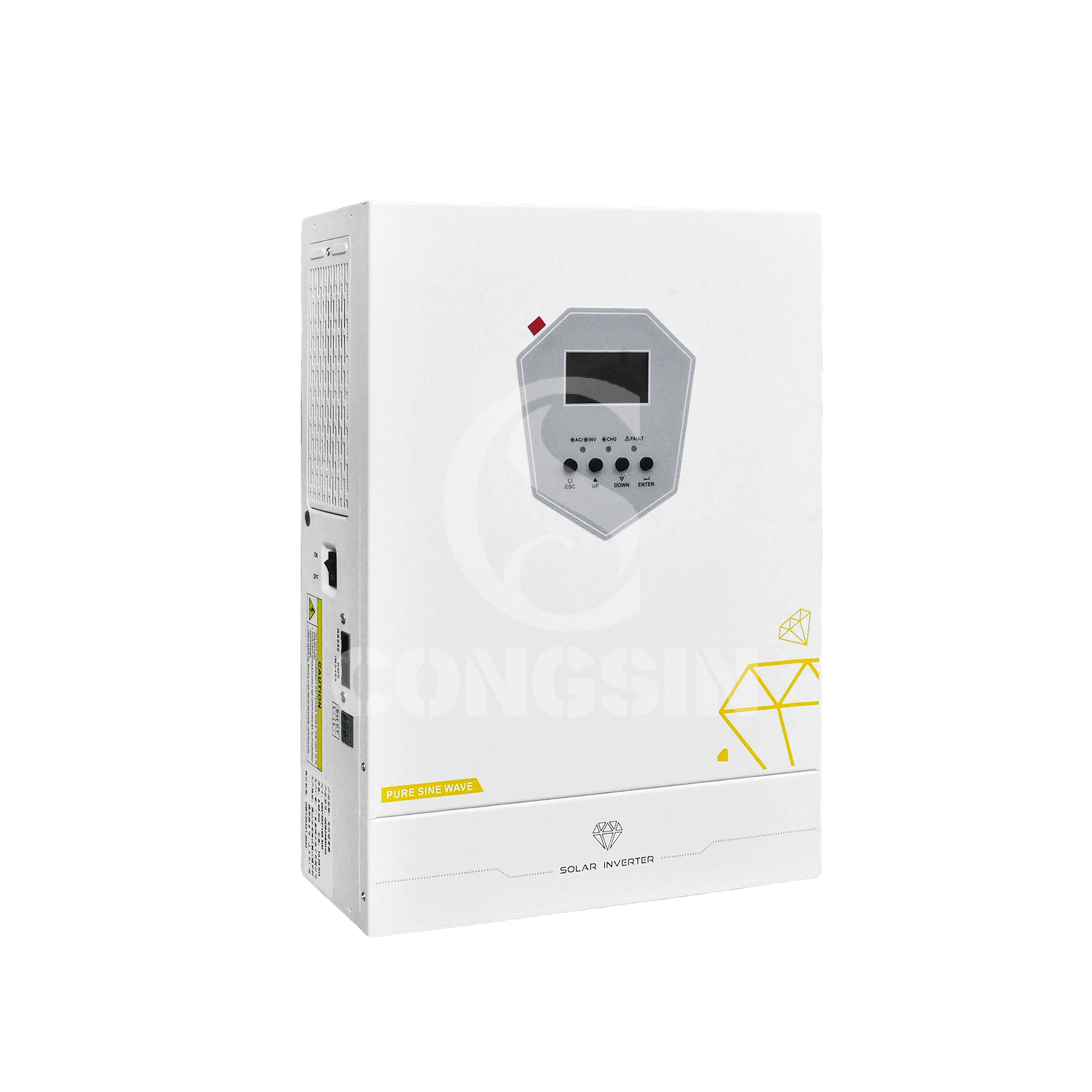
Factory Direct Sales 6000W Hybrid Solar Power Inverter with Controller and LCD Display
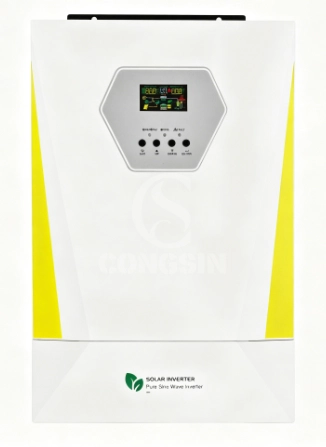
Congsin 4000W and 6000W Hybrid Inverter with Controller with LCD Display and CE Certification Solar
Power your solar system efficiently with the Congsin 4000W and 6000W Hybrid Inverter. Featuring an integrated MPPT Controller, this CE Certified inverter ensures optimal energy conversion. Monitor performance effortlessly via the intuitive LCD Display. Reliable, powerful, and ready for your sustainable energy needs.
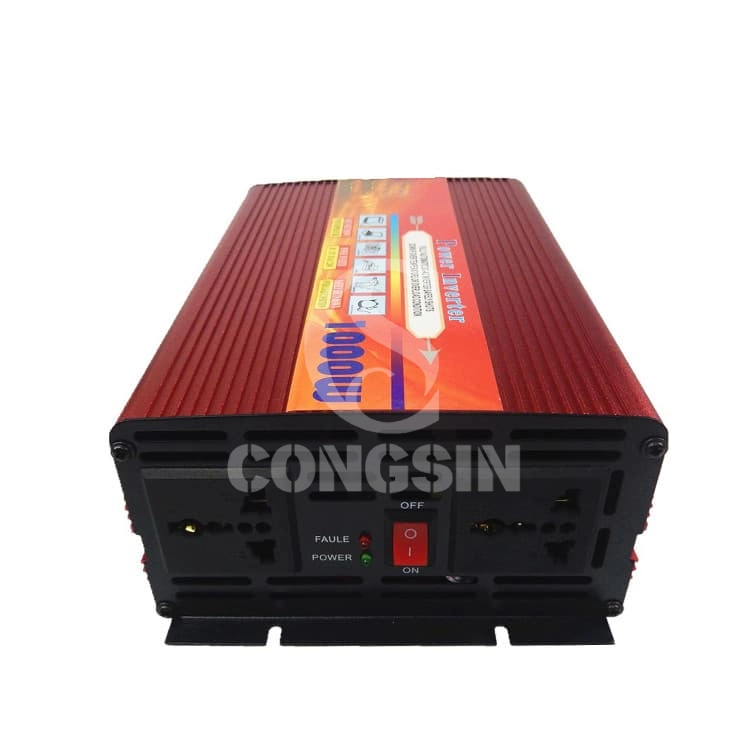
Congsin Manufacturer Wholesales Big Capability Modified Sine Wave Inverter with Red case and Double fan
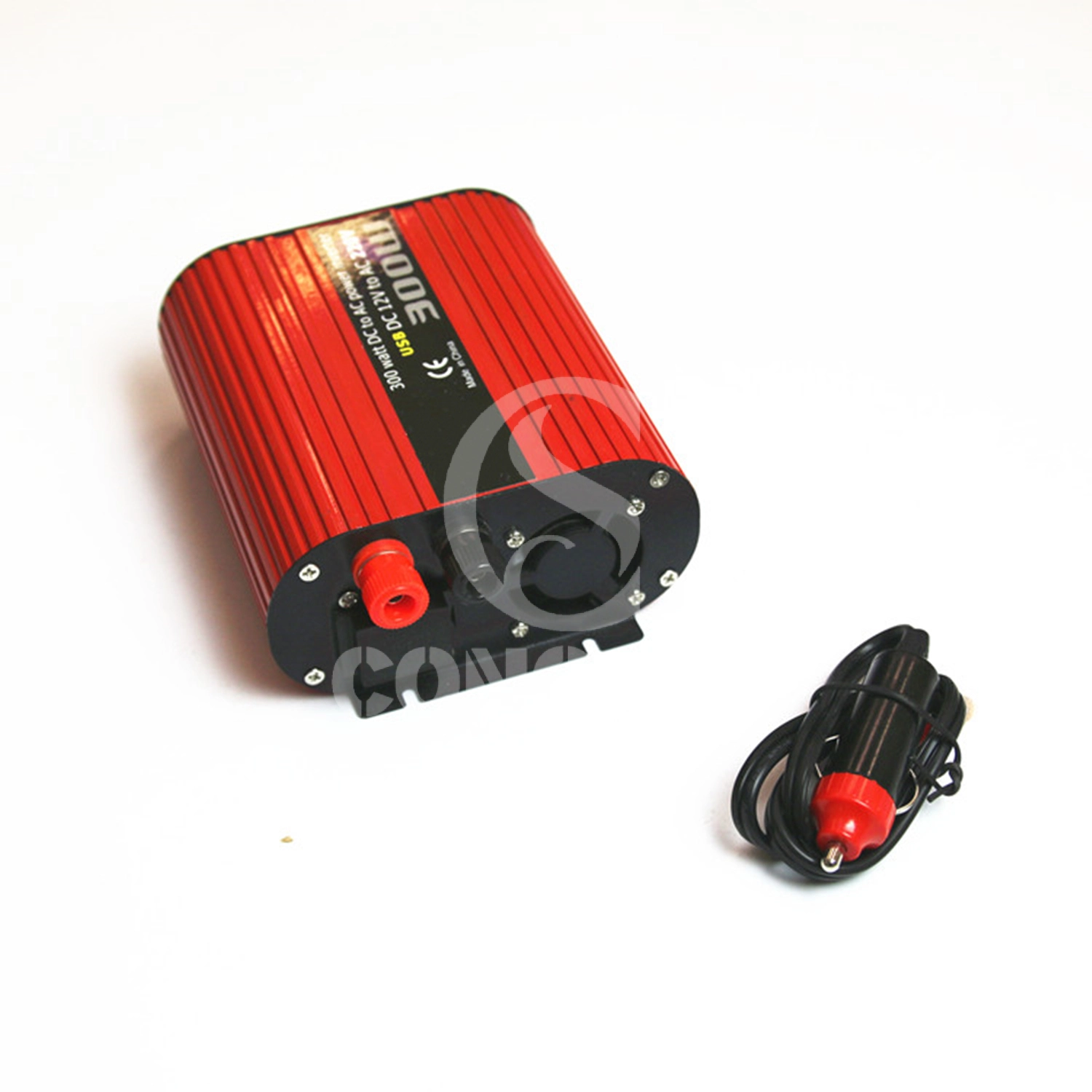
Factory Direct Sales Portable 150W Modified Sine Wave Inverter DC12V to AC220V Off-grid Sine Wave Inverter with Two USB and Universal Socket
Congsin's Portable 150W Modified Sine Wave Inverter powers your journey! This versatile Car Power Inverter with USB acts as a reliable 12V to 220V converter, ensuring an essential off-grid power supply. With dual USB ports and a universal socket, enjoy convenient power on the go.

CONGSIN is a trusted OEM factory for power inverters, solar charge controllers, and DC converters. Reliable solutions for global B2B buyers.
 High Quality
 7/24 Service
 Guaranteed Warranty
© 2025 Congsin. All Rights Reserved.
 WeChat
 Scan QR Code
sin cong
teaimei10
Whatsapp: +8618028086791
Scan QR Code